
Welcome to Neuma

Check out OPEN WORLD! An eight-week online course for young people ages 17–19 who want to develop the skills, confidence, and self-understanding to navigate adulthood.
It's designed for teenagers who are already asking important questions about themselves and their futures. Young people who recognize areas where they'd like to grow, who are curious about psychology and personal development, and who would welcome the opportunity to explore those interests alongside others who feel the same way.

Therapy, coaching, and Consultation for individuals and organizations seeking deeper, more lasting change
People often seek psychological help because something is wrong. Anxiety has become difficult to manage. Depression has made life feel smaller. A relationship is struggling. A student is overwhelmed. An old experience continues to influence the present.
There is good reason for psychotherapy to begin there. When something is causing suffering, reducing that suffering matters.
But we do not think psychological health ends with the absence of symptoms.
At Neuma Psychological Services, we are equally interested in what becomes possible when people understand themselves more deeply, relate to others more honestly, make choices with greater clarity, and build lives increasingly aligned with what matters to them.
Sometimes that work is psychotherapy. Sometimes it is coaching. Sometimes psychological expertise is most useful not to an individual at all, but to a family, school, organization, or community trying to understand the people within it.
What connects all of our work is a larger interest in human flourishing: not simply reducing what diminishes life, but cultivating more of what makes life meaningful, connected, and fully lived.
[EXPLORE OUR SERVICES]
More Than the Absence of Symptoms
Much of modern healthcare is understandably organized around identifying what has gone wrong and trying to correct it. Mental healthcare has inherited much of that framework.
Anxiety should decrease. Depression should improve. Intrusive thoughts should become less powerful. Trauma should exert less influence over the present.
Those are worthwhile goals, and when symptoms are interfering substantially with someone's life, they may be the most important place to begin.
But imagine that the symptoms improve.
Then what?
A person can be less anxious without knowing what they want. Someone can recover from depression while remaining disconnected from meaningful relationships. A young adult can become more productive without becoming any clearer about what is worth working toward. A couple can learn to argue less without necessarily becoming better at knowing and loving one another.
For us, psychological health also includes self-understanding, discernment, creativity, meaningful relationships, healthy boundaries, flexibility, connection, purpose, and the ability to participate more fully in one's own life.
We are interested in helping people suffer less.
We are also interested in helping them live well.
Why “Neuma”?
Our name comes from the Greek word pneuma, a word associated with breath, spirit, and the vital force of life.
We were drawn to the idea because it describes something that can be difficult to capture in clinical language: the difference between merely functioning and feeling genuinely alive.
A life can look successful from the outside and still feel strangely disconnected from the person living it. Someone can meet expectations, accomplish important things, care for other people, and manage responsibilities while gradually losing contact with curiosity, creativity, relationships, meaning, or their own desires.
Psychological work can help restore some of that contact.
For us, the goal is not some permanent state of happiness or self-actualization. Human life will always include uncertainty, loss, conflict, disappointment, and pain. Psychological health is partly the capacity to experience those things without allowing them to become the entirety of life.
We chose the name Neuma because we wanted our practice to remain oriented toward something larger than symptom reduction: helping people become increasingly capable of inhabiting their lives with awareness, freedom, connection, and vitality.
Psychotherapy
Understand what hurts. Understand what keeps happening. Create room for something different.
Psychotherapy is appropriate when psychological symptoms, painful experiences, relationships, or recurring patterns are interfering with life.
We work with anxiety, depression, OCD, ADHD, trauma, perfectionism, relationship difficulties, identity concerns, family conflict, and other emotional and relational challenges.
Our approach is thoughtful and relational. Both of us work from a psychodynamic perspective, which means we take seriously the ways that earlier experiences and important relationships shape how people understand themselves, other people, and the world around them.
We also bring different clinical specialties and treatment approaches to that work.
Zach works extensively with adolescents, college students, young adults, adults, and creative people. His clinical interests include anxiety, OCD, ADHD, perfectionism, identity development, emotional regulation, relationships, motivation, and the experience of feeling stuck despite understanding intellectually what needs to change. He is trained in Internal Family Systems and frequently incorporates IFS and other parts-oriented approaches into his work.
Alicia works primarily with adults, couples, and adult family relationships. Her areas of particular expertise include trauma, codependency, anxiety, depression, OCD, relationship patterns, and intergenerational family dynamics. She is a certified EMDR therapist and uses EMDR extensively in her clinical work.
Neither of us believes that a therapeutic modality should become more important than understanding the person sitting in front of us.
Good therapy begins with curiosity.
[ EXPLORE THERAPY ]
Therapy for Teens, College Students & Young Adults
Adolescence and emerging adulthood involve some of the most significant psychological transitions of a person's life.
Young people are developing identities, separating from parents, building increasingly important relationships outside their families, discovering what they believe, making consequential educational and vocational decisions, and gradually becoming responsible for lives that other people have largely managed for them.
That process is rarely tidy.
Zach specializes in working with adolescents, college students, and young adults around anxiety, ADHD, OCD, perfectionism, motivation, social concerns, relationships, identity development, family conflict, academic pressures, increasing independence, and questions about vocation and direction.
Some young people need treatment for significant psychological symptoms.
Others need a thoughtful adult outside their family who can help them understand themselves while taking their growing independence seriously.
Often, they need some combination of both.
[ THERAPY FOR TEENS & ADOLESCENTS ]
[ THERAPY FOR COLLEGE STUDENTS & YOUNG ADULTS ]
Therapy for Adults
Adults come to therapy for many different reasons.
Sometimes a recognizable psychological concern has become difficult to manage. Sometimes an important relationship is struggling. Sometimes an experience from years ago continues to shape the present.
And sometimes life appears to be functioning reasonably well while the person living it has begun to wonder whether something important is missing.
Both Zach and Alicia work with adults experiencing anxiety, depression, OCD, questions of identity, relationship difficulties, and concerns related to religious experiences or religious trauma.
Their different specialties allow clients to find a therapist whose approach fits the work they want to do.
Zach's work particularly includes ADHD, emotional regulation, perfectionism, creativity, and Internal Family Systems.
Alicia's work particularly includes trauma, codependency, relationships, family systems, and EMDR.
[ EXPLORE ADULT THERAPY ]
Couples & Family Relationships
The people who matter most to us are also the people with whom our deepest patterns tend to emerge.
Both Zach and Alicia work with couples seeking better communication, greater understanding of themselves and one another, healthier boundaries, increased relationship satisfaction, and a stronger ability to identify and communicate their needs.
Alicia also specializes in intergenerational family therapy: work between adult members of the same family who want to address old conflicts, new challenges, changing roles, or relationship patterns that may have developed over decades.
This can include parents and adult children, adult siblings, and families navigating marriage, grandchildren, aging, caregiving, religion, boundaries, estrangement, or other transitions that require relationships to change.
[ EXPLORE COUPLES THERAPY ]
[ EXPLORE INTERGENERATIONAL FAMILY THERAPY ]
Coaching
Important psychological work does not always require psychotherapy.
Many of the questions people bring to therapy are not inherently symptoms of mental illness.
How do I decide what I want to do with my life?
Why am I having difficulty following through on things that matter to me?
How do I establish healthier habits?
How do I prepare to leave home?
How do I build better relationships?
How do I develop healthier boundaries with work?
How do I know whether I am pursuing something because I genuinely value it or because I have learned that achievement is how I prove my worth?
These are psychological questions, but they are also ordinary human questions.
Coaching provides a place to work on development, discernment, relationships, habits, transitions, and personal growth without assuming that something is clinically wrong.
Our coaching work can include student and young adult development, college readiness, vocational discernment, communication and relationships, life transitions, premarital work, and other areas in which psychological understanding can help people become more intentional about how they live.
Zach also offers Creative Coaching for writers, musicians, performers, artists, and other creative people navigating creative blocks, perfectionism, burnout, performance anxiety, sustainable creative practices, self-doubt, and the development of an authentic creative voice.
The purpose of coaching is not simply optimization.
Becoming more efficient matters considerably less if we have never stopped to ask what we are becoming more efficient at doing.
[ EXPLORE COACHING ]
Psychological Consultation
Psychology is happening wherever people gather.
Mental health does not exist only in therapy offices.
Psychology is already at work in classrooms, workplaces, churches, rehearsal rooms, summer camps, colleges, nonprofits, families, leadership teams, and every other place where people are trying to learn, work, create, relate, or accomplish something together.
Organizations frequently encounter psychological questions without needing—or wanting—to turn those questions into psychotherapy.
A school may want staff better prepared to recognize and respond to student mental health concerns.
A church may want to provide thoughtful education around parenting, marriage, relationships, or family life.
An arts organization may be confronting performance anxiety, perfectionism, burnout, or questions about how to pursue excellence sustainably.
A youth organization may need help supporting anxious or neurodivergent young people.
A business or nonprofit may want a more psychologically informed understanding of communication, boundaries, leadership, motivation, burnout, or organizational relationships.
Neuma provides consultation, training, workshops, and program development for organizations that want access to psychological expertise without needing a full-time mental health professional on staff.
Depending on the project, consultation may be provided by Zach, Alicia, or both.
[ EXPLORE CONSULTATION ]
Two Clinicians. Different Specialties. A Shared Understanding of Psychological Health.
Neuma is an intentionally small practice.
We are not trying to assemble a large roster of clinicians capable of serving every possible need. We would rather be clear about the work we do particularly well and help prospective clients determine whether one of us is a good fit.
Two therapists. Two distinct specialties. One shared commitment to meaningful change
We are a private psychotherapy practice dedicated to helping people move toward greater clarity, healing, and wholeness. While we share a depth-oriented, compassionate approach, each of us brings a distinct specialty and more than 20 years of experience.
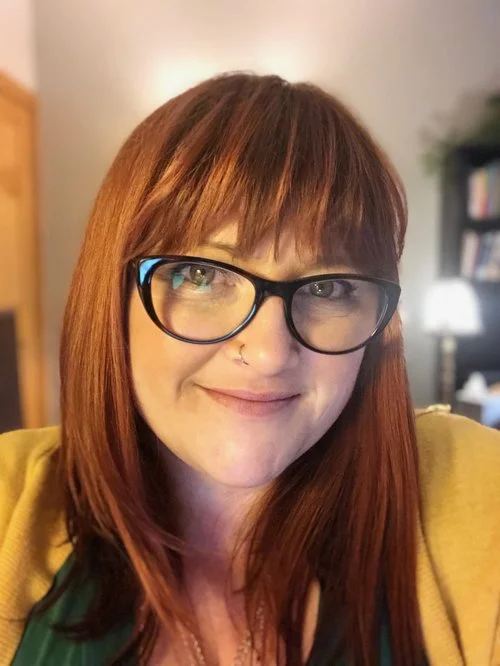
Dr. Alicia Meyer, PsyD, LPC
Alicia works primarily with adults, couples, and adult family relationships.
Her specialties include trauma, codependency, anxiety, depression, OCD, relationship patterns, boundaries, couples work, and intergenerational family therapy.
She is certified in EMDR and brings a relational and psychodynamic perspective to understanding how earlier experiences and relationships continue influencing life in the present.
Alicia also provides coaching and consultation around relationships, couples and family systems, communication, boundaries, trauma, and codependency.
In-person in Glendale, WI, and telehealth across Wisconsin

Zach Meyer, MA, LPC
Zach works particularly with adolescents, college students, young adults, adults, and creative people.
His clinical interests include anxiety, OCD, ADHD, perfectionism, emotional regulation, motivation, identity development, relationships, creativity, and the transition into adult life.
His work is psychodynamic and relational and frequently incorporates Internal Family Systems, ACT, ERP, and other approaches according to what the person and problem require.
He also provides coaching for students, young adults, and creative people and psychological consultation for schools, colleges, camps, youth organizations, arts organizations, churches, nonprofits, and other organizations serving people.
In-person in Glendale, WI, and telehealth across Wisconsin and Iowa
Thoughtful Care, With Room to Do Meaningful Work
Neuma is a private-pay practice.
That structure allows us to make decisions about treatment based primarily on the person seeking help rather than on what an insurance company requires us to diagnose, document, or justify.
For psychotherapy clients who have out-of-network benefits, we can provide documentation that may allow them to seek reimbursement directly from their insurance company.
We provide in-person psychotherapy from our office in Glendale, Wisconsin, serving Milwaukee and the surrounding communities.
We also provide telehealth psychotherapy throughout Wisconsin, allowing clients to work with us from Madison, Milwaukee, and communities across the state.
Coaching and consultation allow us to work more broadly with people and organizations when psychotherapy is neither necessary nor the best fit.
A Larger Definition of Psychological Health
We do not believe that a good life is one in which nothing hurts.
Grief hurts because people matter.
Uncertainty is unavoidable when decisions actually matter.
Relationships require vulnerability precisely because we cannot control how another person will respond.
Creative work exposes us to judgment because we have made something that belongs to us.
Growing up requires leaving behind forms of safety that once served us.
A psychologically healthy life still contains all of those things.
The goal is not to eliminate the difficult parts of being human.
It is to become increasingly capable of meeting them without losing access to everything else: relationships, creativity, meaning, curiosity, courage, connection, purpose, and the capacity to experience ourselves as fully alive.
That is the kind of work we want Neuma to make possible.
Begin Here
You do not need to know which therapist, modality, or service is right before contacting us.
You may know exactly what you are looking for.
Or you may simply know that something needs to change.
Tell us a little about what brings you here and what you hope will be different. We can help determine whether therapy, coaching, or consultation makes sense and which of us is likely to be the better fit.
[ CONTACT NEUMA ]